I’ve been meaning to make an “example itinerary” post like this for a while. I hesitated because I wanted to wait until I had better pictures (I don’t want to steal from the Internet). Unfortunately, even though I’ve been multiple times to all of these places, I keep forgetting to snap usable shots.
Now, I’ve finally decided to just work with what I have. This post has been long enough in the making, and I’m feeling inspired since my family is finally coming to visit next month!
For this sample itinerary, let’s assume you would be in Japan for over a week, since it’s such a long flight to get here. I know most people want to spend a majority of the trip in famous cities like Tokyo and Kyoto…but I hope you would consider this nice, compact 3-day weekend in Toyama Prefecture.
I’m imagining that you’ve already been enjoying Japan for a few days, so you’ve magically gotten over your jet lag. Or maybe you’ve stuck to the plan created by Timeshifter (not sponsored), so you never had jet lag in the first place.
Anyway, let’s say your train pulls into Toyama Station in the afternoon.
Friday
3PM There’s a nice place called Kansui Park about 15 minutes from the station. I propose we drop your suitcase at the hotel–my suggestion is Hotel JAL City (…not sponsored)–and take a little walk. The train ride from Tokyo is only about 2.5 hours, so you shouldn’t be too exhausted, but if you need a pick-me-up, we can go to the most beautiful Starbucks in the world! (Fine print: It was claimed to be one of the most beautiful Starbucks cafes in an article in 2008, and the reputation stuck).
This is the view from the top of the bridge that serves as the centerpiece to the park.
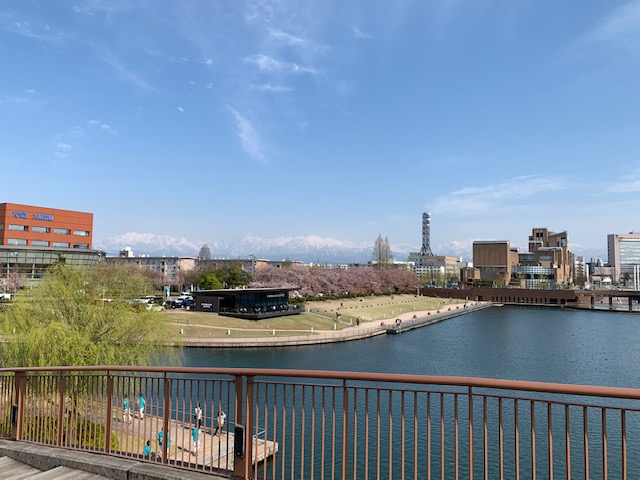
You can see the Tateyama mountain range in the distance.
The building next to the row of cherry blossoms overlooking the water is the aforementioned Starbucks. It’s at its peak “picturesque” in spring, but you’re far more likely to get a seat on the terrace in winter.
5PM Let’s head back toward the station and do a little shopping.
There’s Marier, where there’s a game center and used goods/clothes shops, and there’s Maroot, which was just built a few years ago.
7PM Time for dinner! I recommend either the ramen restaurant across from the station, or the okonomiyaki restaurant on the basement level of the CIC building.
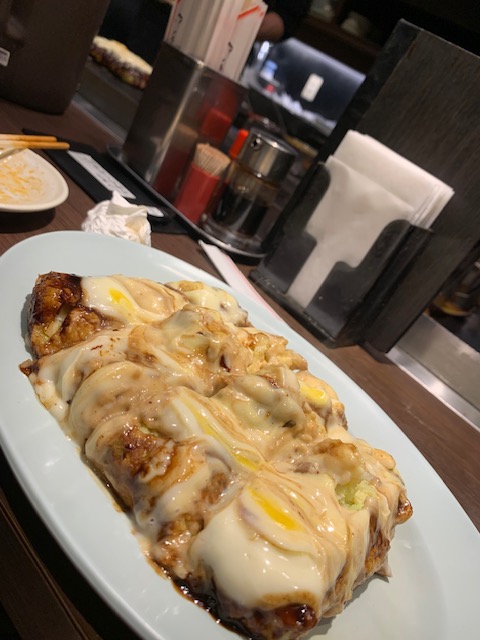
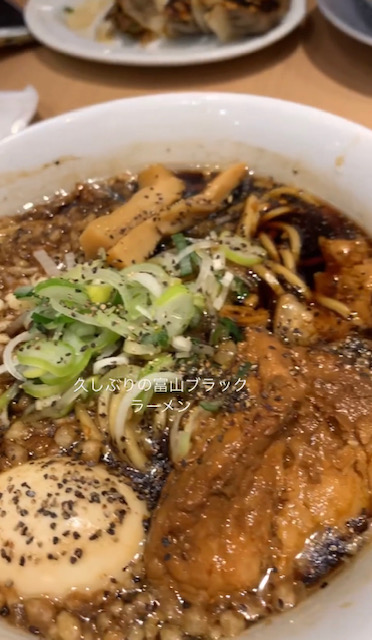
I’m realizing that neither of those pictures looks particularly appealing, but I swear they’re both delicious! On the left is Boteyan’s okonomiyaki, covered with their signature thick mayonnaise sauce. For those who don’t know, okonomiyaki is frequently referred to as a “savory pancake,” but I don’t think that quite fits. There’s much more cabbage and your choice of shrimp or pork (or various other proteins, depending on the shop) than “batter,” so it feels more like a stir-fry to me.
On the right is Toyama’s famous black ramen. It gets its dark color from soy sauce. It’s famous for being super salty, so it’s best not to drink all the broth. I like it a lot!
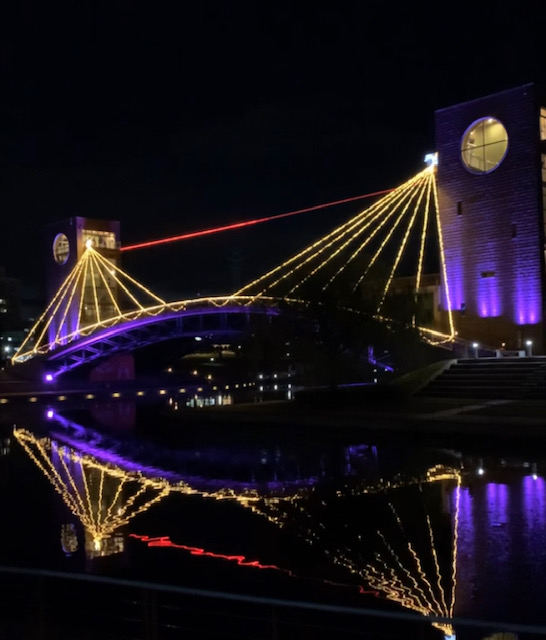
9PM Maybe drop by Kansui Park one more time for the night view.
10PM I don’t think a visit to Toyama would be complete without a little taste of the nightlife! For those of you who’ve never tried karaoke in Japan, it is a must.
There are two styles. One is to rent a private room. In this style, you and your friends are the only ones singing and the only ones listening. You can bring your own food and drinks, which makes it pretty cost-effective compared to a bar. There’s a popular chain called Jankara, but I’m a member at Manekineko. They just added soft-serve iced cream to their drink bar!
The other style is to go to a karaoke bar (aka: a bar with karaoke). Anyone can enter a song, and mics are passed around among bar guests. It feels a lot less intimidating than some karaoke bars in the US, since you don’t have to get up on a stage and perform for the room. My go-to shops are Baku Baku and Esora.
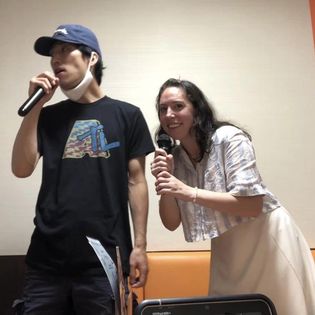
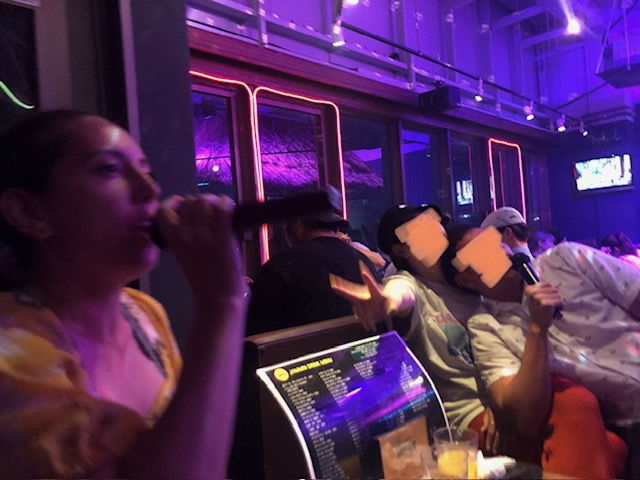
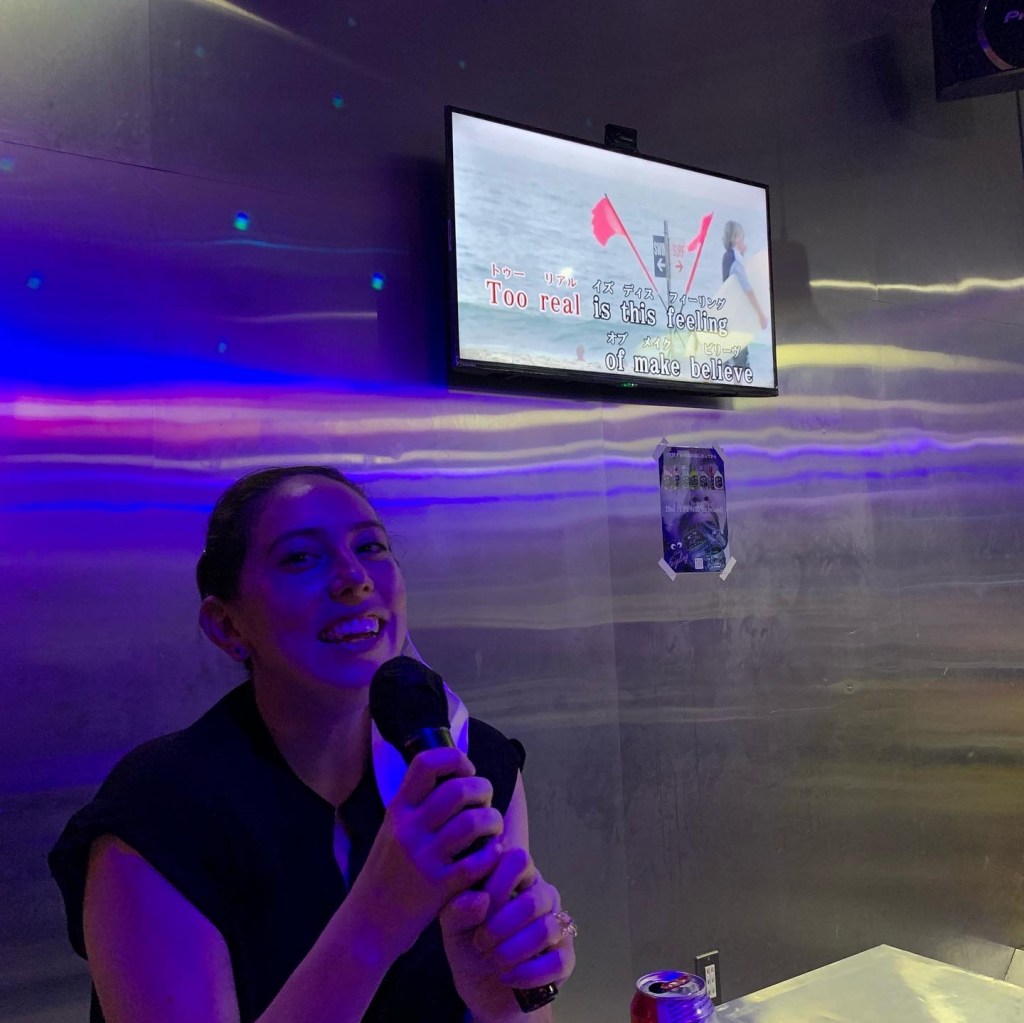
Left to right, the pictures are from Manekineko, Jammin, and Unisex.
That’s the end of day one.
Saturday
9AM Let’s start with breakfast! We can either go to Shimeno Coffee for a Japanese-Western cafe experience, or we can go to the Starbucks in Maroot. I know what you’re thinking — Starbucks again? But listen, it’s actually a unique branch shop which focuses on tea and offers several different drink options.
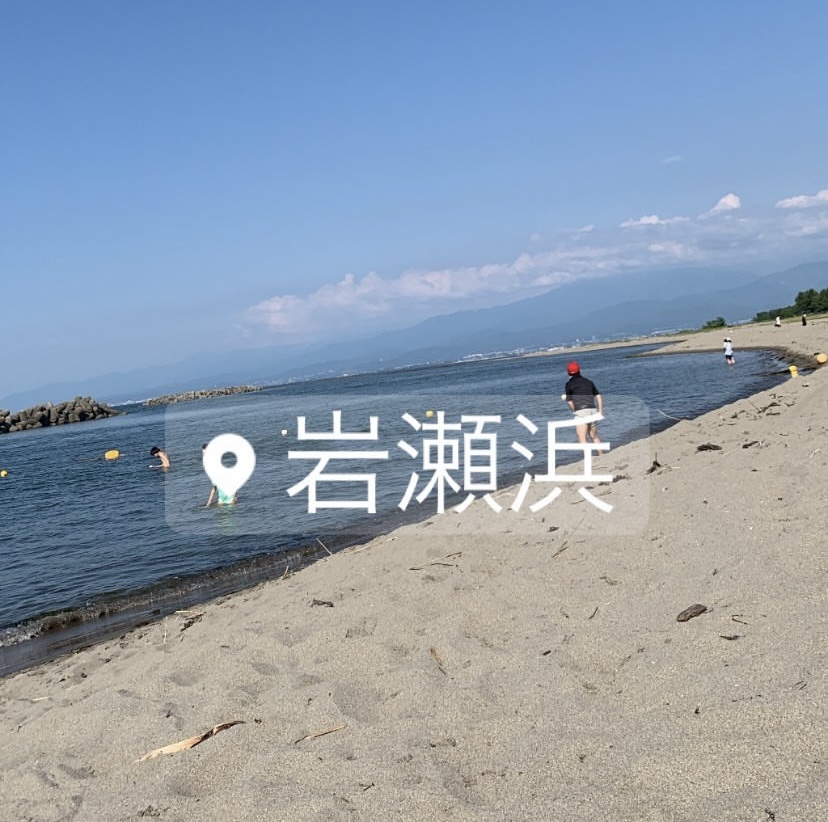
10AM We can hop on the tram and get to the beach in about 30 minutes. Iwasehama has a nice, strollable shoreline and is never too busy. It’s then a 20-minute walk to the town of Iwase. It takes barely ten minutes to walk from one end to the other, but it’s charming and showcases traditional architecture.
12PM It’s finally noon, so we can head inside the Masuda Sake Brewery, which is most well-known for their brand Masuizumi. Their brewery boasts an excellent selection of sake for tasting. You can either pay by the cup or do a 30-minute all-you-can-drink plan. Last time I went, I did the 30 minutes, and I got to try 12 different samples!
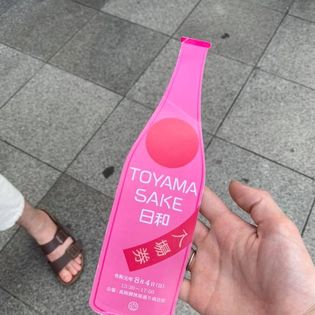
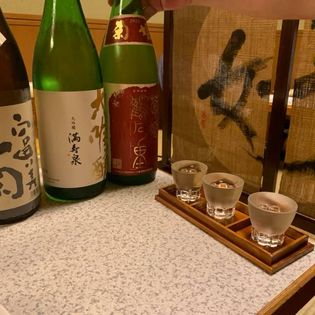
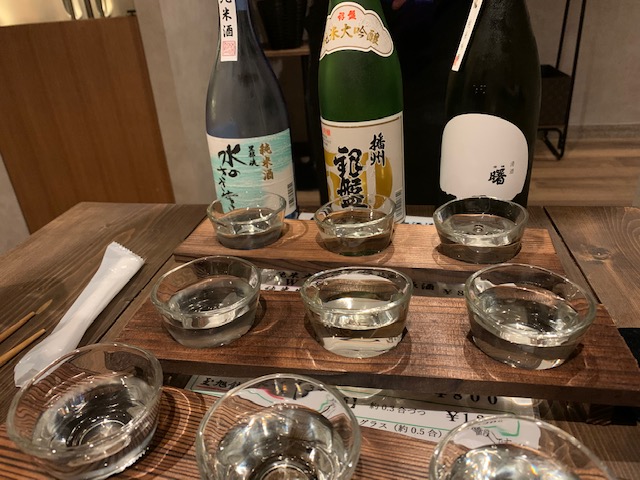
None of these pictures are from Masuda Brewery because I’ve only been once and failed to document it with my phone camera. (This is what I was talking about in the beginning of the post.) On the left is a flier from a sake event I went to in August 2019, the middle is a tasting flight from my favorite Takaoka izakaya called Bidama, and the right is probably from Night Cafe Pompuku.
After all that sake, I think we need lunch and a walk. We can eat at the restaurant attached to the brewery, or we can find some local sushi. This area is is known for its delicious seafood caught in Toyama Bay. Specialties are hotaru ika (firefly squid), shiro ebi (white shrimp), and Himi buri (yellowtail).
If we feel up it, we can climb a few flights of stairs to reach an observation deck that looks out on the sea and distant mountains. On a clear day, it’s gorgeous! We can also walk around inside a traditional-style home that has been preserved for tourists.
2PM Now that we’ve had a few hours of rest, it’s time for Kobo Brewpub! Despite the name, it’s mostly a brewery. They have small plates of sausages and thin French fries, but I definitely wouldn’t recommend going on an empty stomach. You can try flights or order pints of local craft beer.
After that, we’ve seen it all, so we can head back to the city.
4PM We can take the train 20 minutes to Takaoka City. This is where I spent the first 3.5 years of my Japan life.
If we time it right, we can just make it to the temple Zuiryuji. It’s quite pretty and has a relaxing atmosphere. Inside, there are some neat little toy models of Takaoka City from various times in history, so you can see how the forests and rice fields gradually turned into homes and shopping malls.
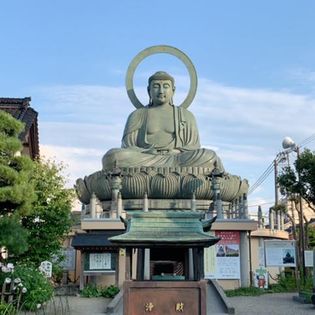
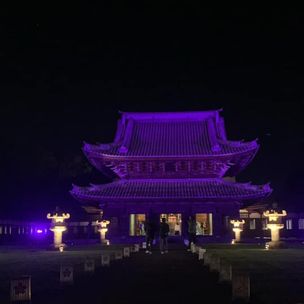
6PM It will probably be getting dark at this point, so we can go see the giant Buddha — he’s lit up quite beautifully at night. Word on the street is that while he is only the 3rd largest Buddha Statue in Japan (after the ones in Kamakura and Nara), he is the #1 most handsome. That’s not me saying that, it’s the general consensus.
7PM A few steps away from the Buddha is the restaurant Bidama, which I mentioned a few paragraphs above. They have a wide variety of Japanese dishes, with some standouts being sashimi (especially the tuna) and burikama (grilled yellowtail collar). I also frequently find myself ordering the fried chicken skins and butter-grilled enoki mushroom. It’s all so good!
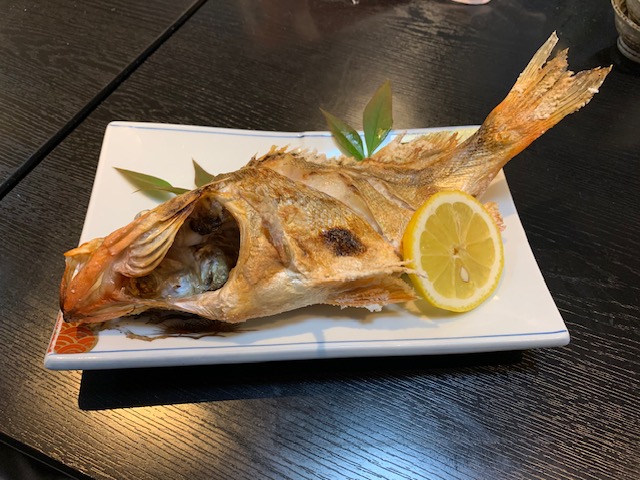
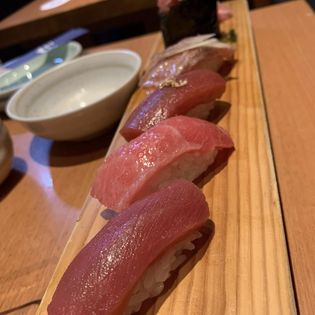
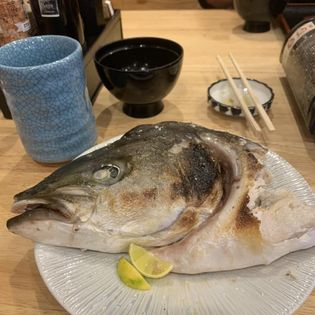
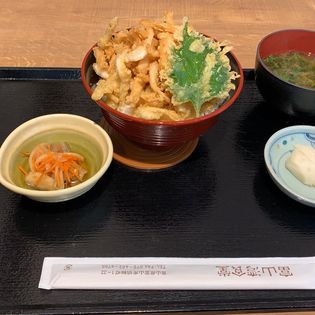
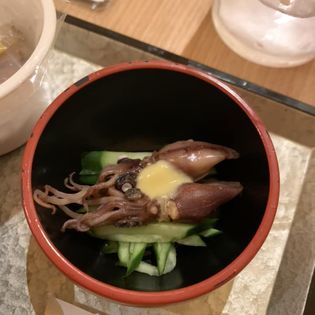
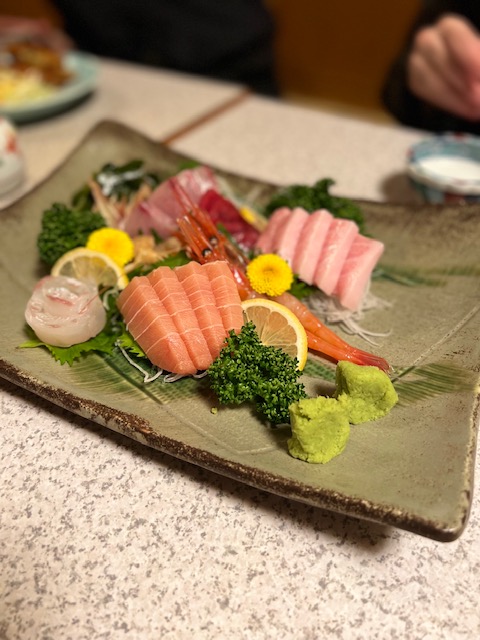
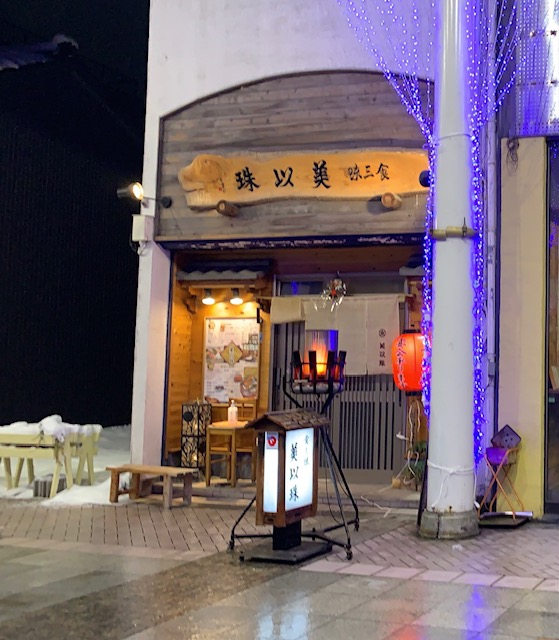
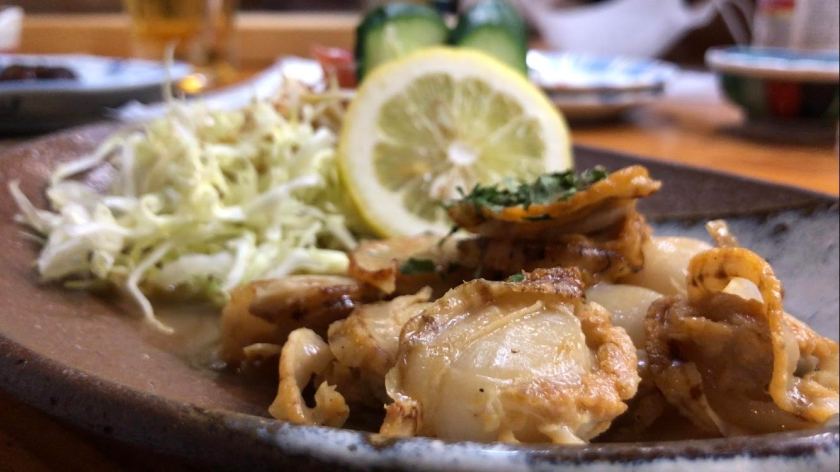
So…yet again, most of the pictures are not from the place that I’m talking about, but it is what it is. Top left is a salt-grilled sea bream at a different izakaya, top middle is maguro (tuna) sushi at a different izakaya, and the top right is the burikama dish I was talking about…at a different izakaya.
The middle left is the fried version of the local specialty shiro ebi, and the middle middle is my favorite way to eat the local hotaru ika–boiled with sumiso (the yellow sauce you can see in the picture, made from miso, sugar, and vinegar). The middle right is actually from Bidama, and it’s the sashimi platter.
The bottom two are also from Bidama. The left is the front of the shop, and the right are butter-grilled scallops.
I usually drink beer (I don’t remember if they have Asahi or Kirin) or lemon sour (fruit sours are sweet cocktails made with flavored syrup and shochu) at Bidama, but if you’re getting sashimi, I recommend a nice sake. If we went together, I’d order us Haneya and Sanshoraku and Kachikoma (all local!).
9PM After all that exquisite food, we can move onto the after-party. It’s hard to plan the night out without knowing my audience, so I’ll suggest two different options.
For a chill night, I can take you to whiskey bar Eden Hall where the super-friendly bartender looks like a happy little hobbit. Then, we can go visit a cozy hole-in-the-wall bar called Atto’s House. He speaks English pretty well and loves the USA, especially Louisiana. Before COVID, he was going to New Orleans once a year to enjoy the music and Cajun food. He’s quite a good cook and often makes a nice late-night snack of po boys or gumbo.
For a more exciting night out, we can go to the club-like bar El Barco, where the half-Brazilian bartender speaks perfect English. He’s the nicest guy you’ll ever meet and can’t possibly be earning a profit at this bar, since drinks are super cheap. He often hires live DJs, especially on Saturday nights. Afterwards, we could hop over to Unisex, where you can do karaoke, darts, and video games (usually Super Smash Brothers or Mario Kart). They have some board games too, I think.
There are so many bars within walking distance in Takaoka and Toyama that it reminds me of Athens (Go Dawgs!).
That’s it for Day 2!
Sunday
I forgot to mention this before, but you’re going to be staying in the APA Hotel in Takaoka. It was built recently, has nice amenities, and is located right in the downtown area.
9AM We have the outdoor bath, so we might as well use it! You’ve heard of onsen, I’m sure? If not, the gist is that natural hot spring water flows into a big bath and people practice communal bathing. Well, at APA they don’t have an onsen, so the water isn’t full of those minerals…but they do have a big bath for communal bathing, and it’s pretty relaxing once you get past the American discomfort with being naked in front of other people, especially the outdoor (fenced in, don’t worry) bath, which feels awesome in winter.
10AM Let’s have breakfast at Amida Cafe! It overlooks the Buddha.
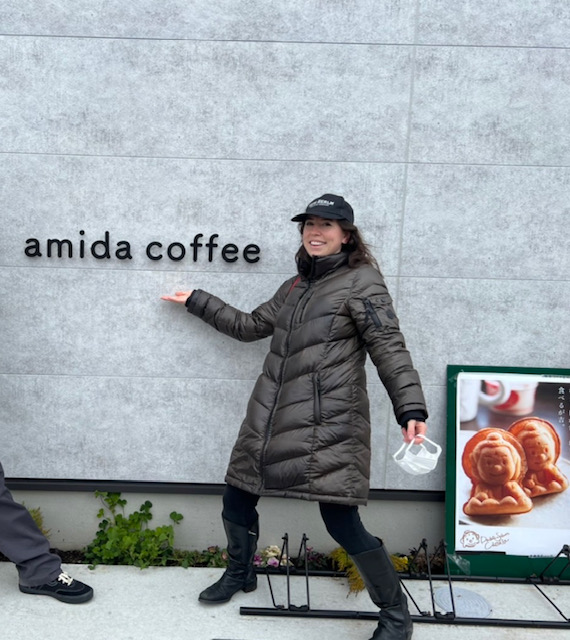
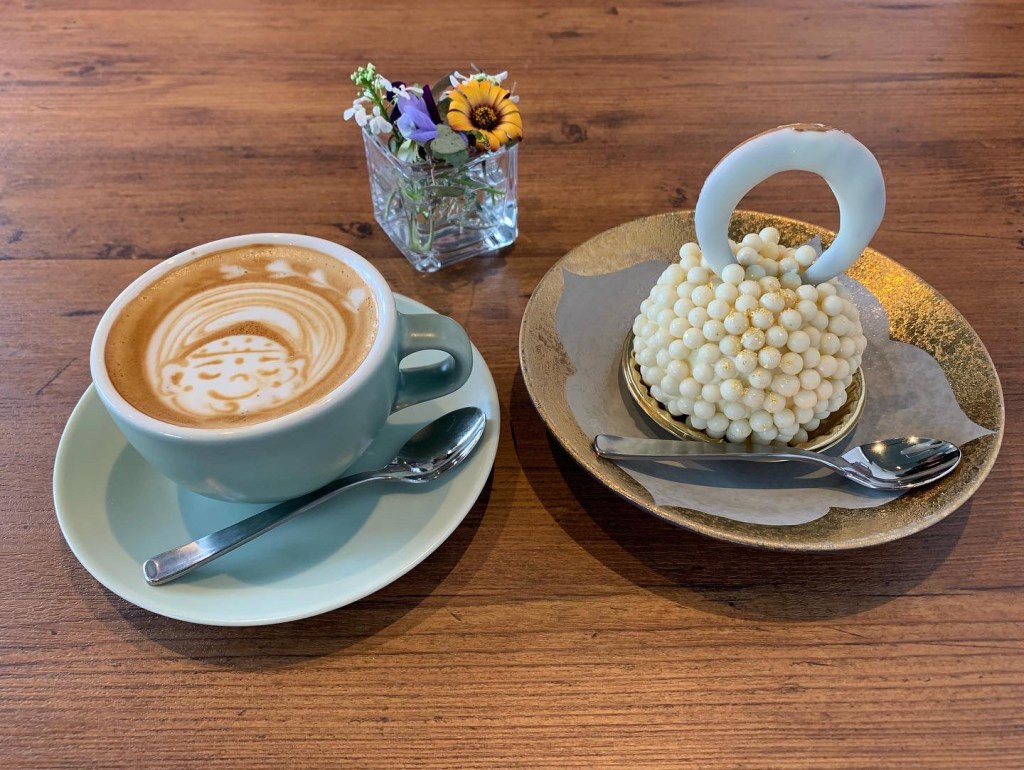
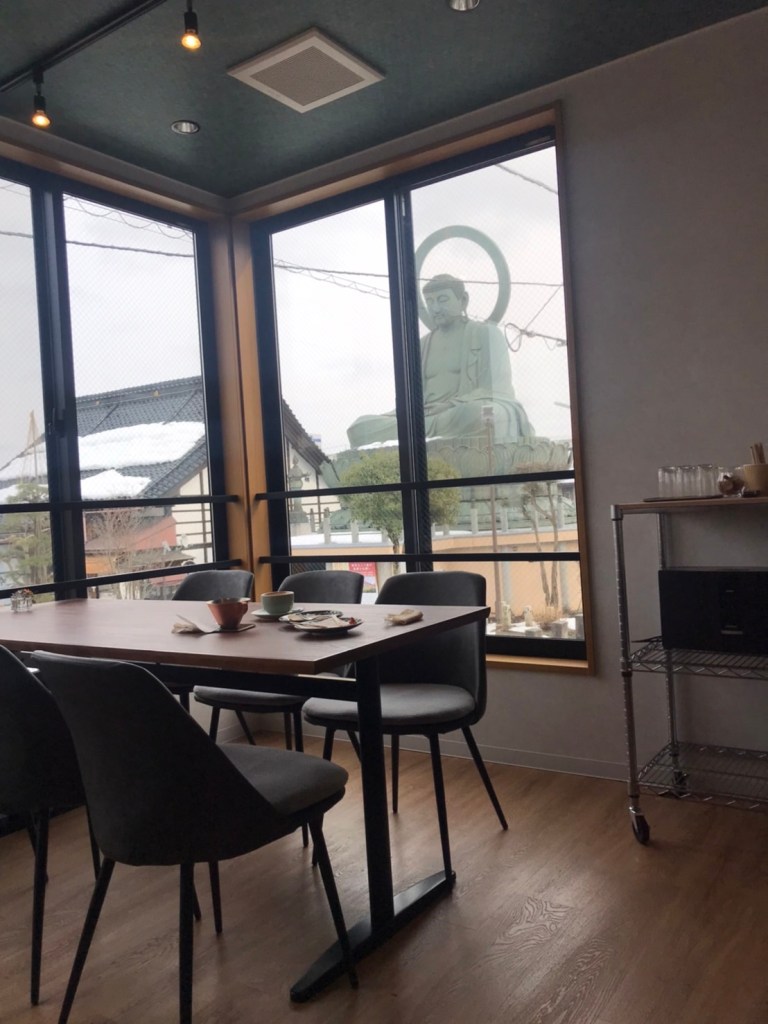
The cakes are often themed around Buddha designs (see the halo on the right one?) and the latte art also always features the famous statue.
12PM Kojo Park is just ten minutes from Amida Cafe, so we might as well go there next. It used to be the site of Takaoka Castle, but it was destroyed a couple hundred years ago and never rebuilt. The only noticeable remnants are the moat surrounding the area and a few stones that used to make up the walls.
There’s a lot of animal interaction to be had here! You can buy little pellets and feed the koi in the pond, which is not the most entertaining thing for tourists, but is definitely a relaxing way to spend a sunny Sunday afternoon if you’re a local. Also, there’s a little zoo that is free to enter. You can see peacocks and monkeys and capybaras and penguins and flamingos!
2PM It’s time to see Takaoka’s most touristy areas: Kanayamachi and Yamachou. They’re both full of traditional architecture and shops with local crafts. Takaoka is famous for bronze and copper and tin, so there’s a lot of that- cups, jewelry, clocks, you name it. There are some pretty cool DIY experiences as well! I’ve made a coaster and a little dish and a pair of earrings.
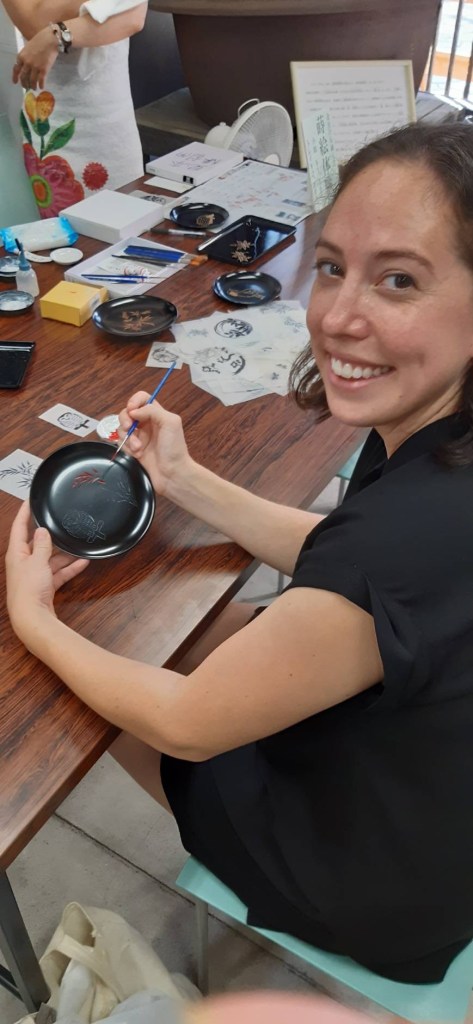
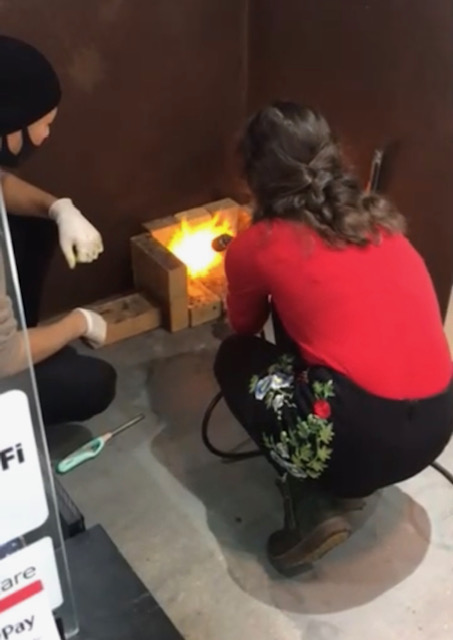
The left is me painting that dish (I had a stencil) and the right is me using an actual blowtorch to create the coaster. Both experiences were super fun and leave you with a nice souvenir!
4PM After the DIY experiences, we can head over to the most famous view in Takaoka — the Amaharashi Coast. You can see the beautiful sea and, on a clear day, a stunning outline of the Tateyama mountain range.
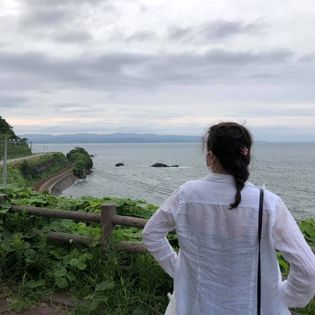
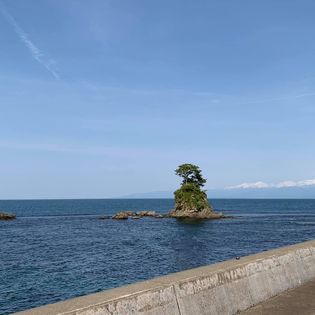
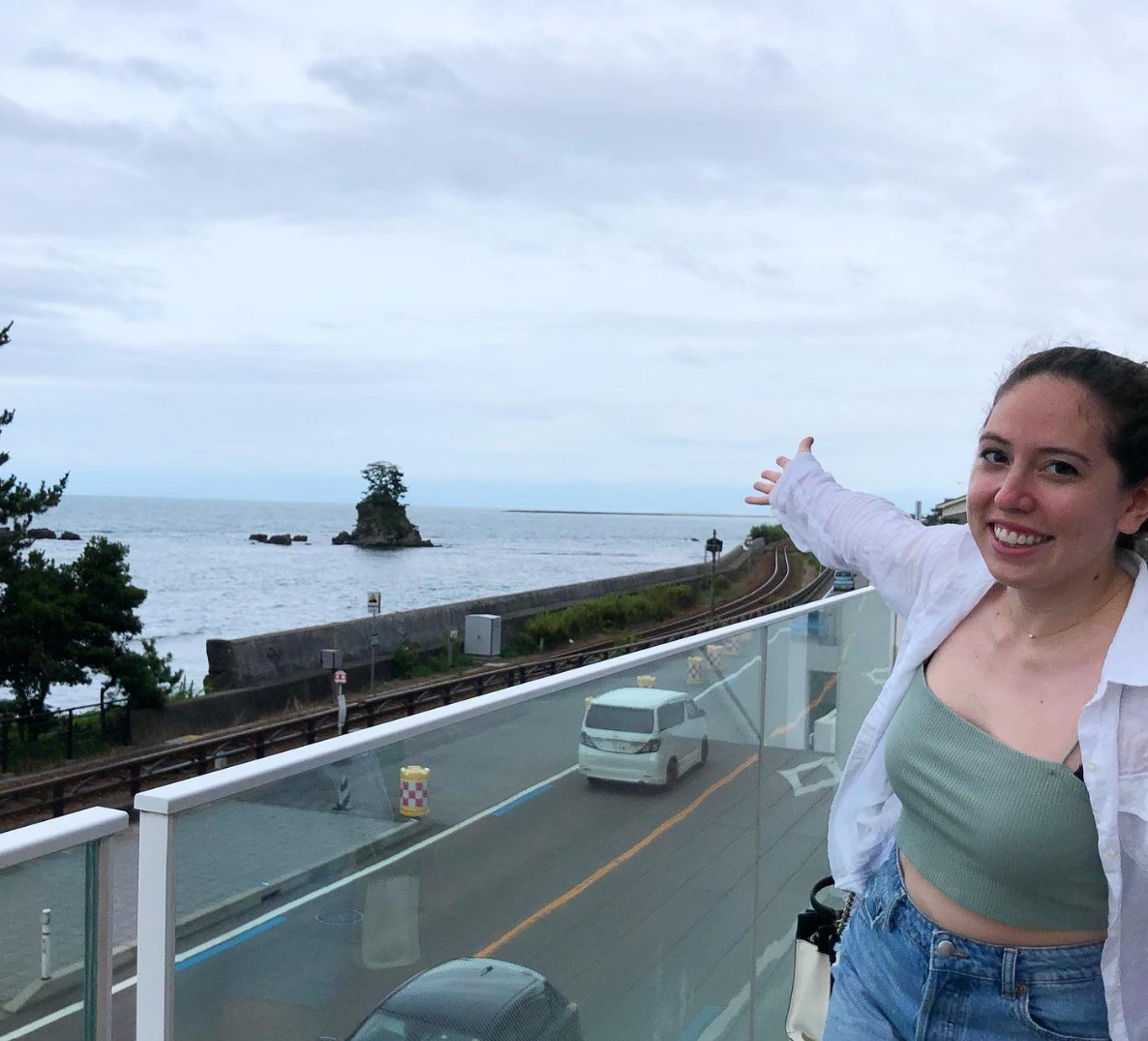
These are not the clearest pictures, so you can’t see the mountains very well, but that’s the gist of it.
And with that, you’ve seen just about all that Toyama has to offer! There are some things we missed — the Torokko train, the snow wall, Shomyo Falls, tea ceremony, and hiking Tateyama — but I think we’ve done our best for a winter visit.
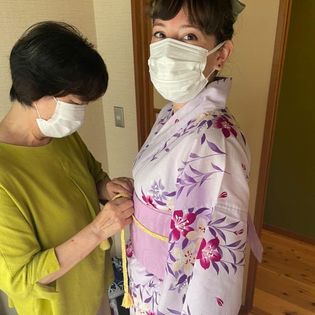
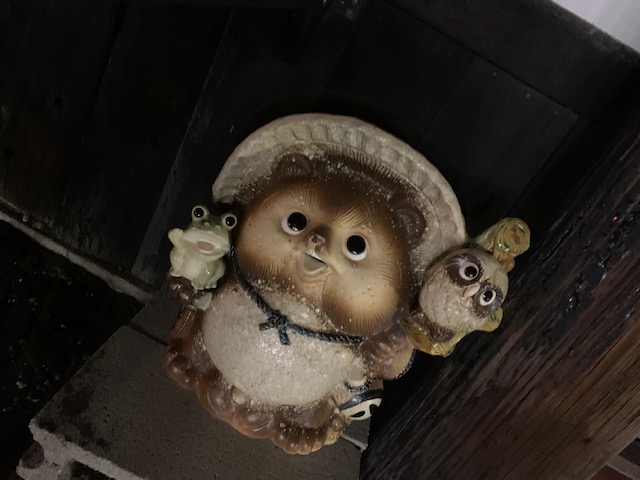
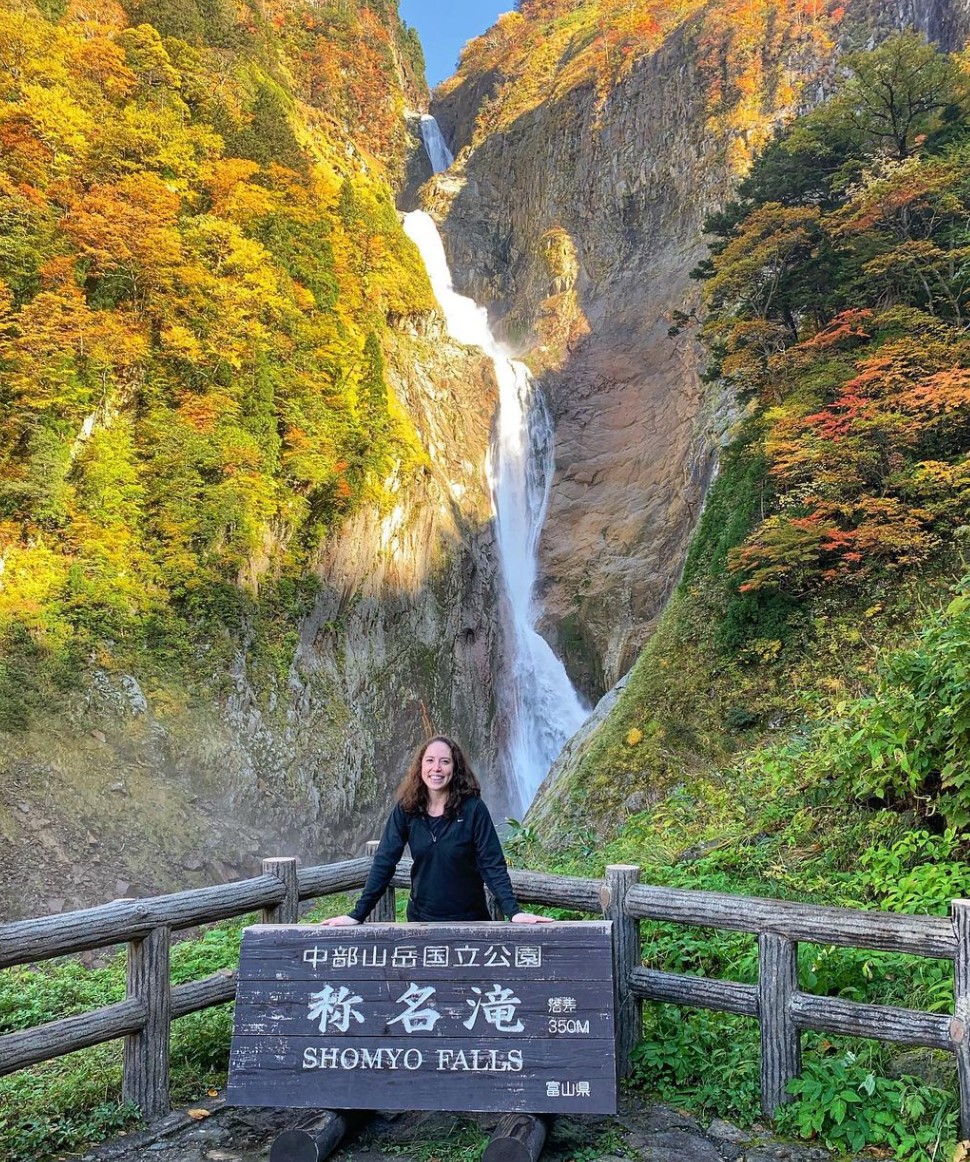
Left is me trying on a summer yukata, the middle is a raccoon dog (tanuki) statue, and the right is one of the highest waterfalls in Japan.
Thanks for reading! I hope to see you over here one day.
Alisa

